Guides
The embalming process: what it is, when it's needed, and what it costs
Most of us know a little about embalming from books, films, and the internet, but the real purpose of the procedure is often misunderstood. Embalming slows the natural decomposition of the body after death, and whether you need it depends largely on what kind of service you plan to hold. This guide walks through what embalming is, why families choose it, the steps involved, the legal rules, how long it lasts, and what it typically costs. Some of the detail here is frank by necessity, so please read at your own pace.
What embalming is
Embalming is a procedure that slows the decomposition of the body after death. It is most often used when there will be a gap between when a person dies and when their cremation or service takes place.
It also comes into play when there will be a viewing of the body, whether at a wake, a funeral, or any service where mourners will see the body. In those cases, embalming is carried out before any cosmetic work, such as makeup, is applied.
Although films and television tend to make it look simple, embalming is a careful, multi-step procedure performed by a trained professional.
How it helps the grieving process
When someone dies, some friends and family want to see them in their natural state, as they appeared before death. For many people, that final viewing helps them begin to grieve and accept the loss. Being able to say a proper goodbye can bring real comfort and a sense of closure.
Why people choose to embalm
Families decide whether to embalm for several practical and personal reasons. The most common ones are set out below.
A delay before the service
When there is a gap between death and cremation or burial, embalming slows decomposition during the wait. This often happens when someone dies away from home and the body must be transported back. In some states it is mandatory to embalm within a set period after death, usually about a week. A funeral home or your local authority can confirm the rules where you are.
An open-casket viewing
If there will be an open-casket service, embalming is generally wanted. It allows the cosmetic work that helps a loved one appear lifelike and natural for those who come to pay their respects.
Death from disease
Embalming is generally required when the cause of death was a disease, and it is especially important if the body needs to be transported.
Do you have to embalm a body?
In most cases, no. If the family chooses a direct cremation, the body is taken straight to the crematorium and cremated right away, without a viewing or service beforehand, so embalming is not needed.
It is also common for the body to be cremated first and a memorial service held afterward. In that case the ashes are present at the memorial in place of the body. You can read more about that path in our guide to direct cremation.
How long embalming lasts
Embalming typically preserves a body for anywhere from a couple of days to about a week. The exact length depends on the chemicals used, how they are applied, and their strength.
The role of formaldehyde and conditions
The main embalming fluid is formaldehyde, and how long it holds depends partly on the surroundings, including whether it is hot or cold, humid or dry. Hot, humid conditions speed up decomposition, while cooler, drier conditions slow it down.
Longer preservation for medical donation
When a body is embalmed for medical donation, it may need to be preserved for far longer. Stronger and larger amounts of formaldehyde can extend preservation to as much as two years. These stronger chemicals give the skin a leathery appearance, so they cannot be used when there will be a viewing.
What happens without embalming
Without embalming, the body decomposes quickly as bacteria break down the soft tissue. The process begins in the pancreas, which holds a large amount of bacteria, and spreads through the body to the other organs. Gases build up, the body becomes bloated, and it eventually begins to liquefy. This is why cold storage or prompt cremation matters when embalming is not chosen.
Embalming before cremation: is it required?
Embalming before cremation is a personal choice for the family and is not required in most cases. Usually the body is cremated and the family then stores, scatters, or buries the ashes, with any funeral held afterward.
Still, many families prefer a funeral or memorial service beforehand. Some people find it hard to accept that a loved one is gone unless they can see the body, so a viewing can be an important part of saying farewell.
Legal requirements
Embalming is not typically required by law, except in unusual circumstances. A private viewing for family and friends is allowed without embalming, with the body kept in cold storage until the viewing takes place.
For a public viewing, such as one held at a funeral home, the laws differ between states, and some funeral homes require embalming as a matter of policy. Your funeral director can explain what applies. Embalming may also be required to transport a body across some state lines.
The embalming process, step by step
When a body is embalmed, the work follows a clear sequence. Each stage below builds on the one before it.
Preparation
The body is first cleansed and disinfected. It is also massaged and gently flexed to relieve rigor mortis, the stiffening that sets in a short time after death. Although rigor mortis eases on its own later, this massaging helps postpone it or move it along.
Arterial embalming
Blood is drained from the vessels while embalming fluid is pumped into the arteries at the same time. A pumping device acts like the heart, moving the fluid through the arteries as the blood runs out of the body and into a drain.
Cavity embalming
This stage removes fluid and gases from the organs. An incision is made near the navel and a large hollow needle called a trocar is inserted to puncture the chest and abdominal organs, replacing their contents with embalming chemicals. The openings in the body are then plugged to prevent leaking.
Hypodermic embalming
A hypodermic needle is used to inject embalming chemicals into any areas the earlier methods could not reach.
Surface embalming
Applied only as needed, this step puts embalming fluid directly onto areas of skin that have been damaged by decomposition. The body is then washed and dried again.
Facial procedures
Before the embalming work, the face is set. Caps are placed over the eyes to keep the eyelids from opening and to hold the eyes in a natural position, typically using a photo of the person for reference. The jaws are wired shut and the lips set with an adhesive so the expression looks as natural as possible.
Cosmetic applications
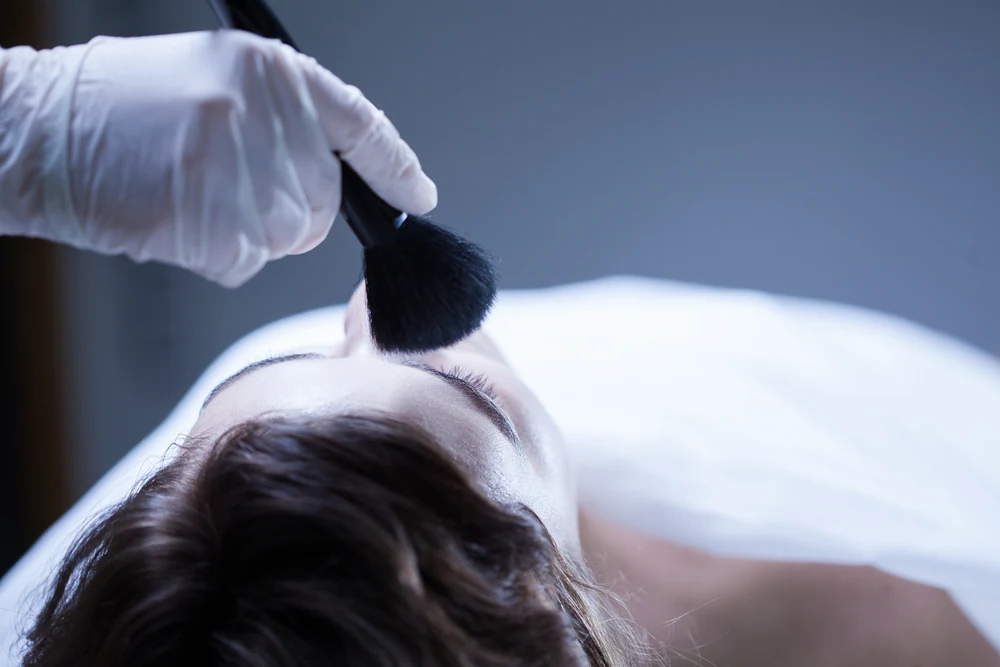
Moisturizer and then makeup are applied to the hands, face, and neck. Gel may be used to style the hair, and powder is applied to absorb oils and mask odors. Where the face, head, neck, or hands have been damaged, reconstruction may be needed, often using wax or plaster of Paris to reshape the area.
Organ donation
If organs are to be donated, they are removed before embalming. This rarely delays the funeral or other memorial services.
How much embalming costs
Embalming is usually billed in two parts: the embalming itself and the aesthetic, or cosmetic, work. Comparing the itemized charges helps you see what you are paying for and decline anything you do not want. You can set these figures alongside our wider cremation costs guide as you plan.
Embalming a body typically takes around 45 minutes to an hour.
The embalming charge
Embalming itself generally ranges from about $200 to $800. The lower end applies to a body in good condition with no injuries. Costs rise when reconstruction is needed, for example after an auto accident, and the more extensive the damage, the higher the price. An autopsied body also tends to cost more because of the extensive incisions involved.
The aesthetics charge
Aesthetic work is usually billed separately and covers washing, dressing, cosmetic application, and placing and positioning the body in the casket. This typically runs from about $90 to $400, depending on how much restoration is required.
Making the decision
Embalming is rarely something we give much thought to during our lives, yet the details matter when the time comes to arrange a loved one's cremation or funeral. The choice often comes down to whether the family wants a memorial service with a viewing.
Sometimes the reason is simply comfort and closure for family and friends. For some people, seeing the body is what allows the mind to accept the loss and say a final farewell. Whatever you decide, your funeral director can walk you through the options at your own pace.
FAQ
The embalming process: what it is, when it's needed, and what it costs: common questions
- Is embalming required by law?
- In most cases, no. Embalming is generally a personal choice rather than a legal requirement. Exceptions can apply for certain public viewings, when a death is caused by disease, or when a body must be transported across some state lines. Rules vary by state, so your funeral director or local authority can confirm what applies to you.
- Do you need to embalm a body before cremation?
- Usually not. With a direct cremation, the body is cremated without a viewing or prior service, so no embalming is needed. Families who want an open-casket service before cremation typically choose embalming so the body can be viewed.
- How long does embalming preserve a body?
- Typically from a couple of days to about a week, depending on the chemicals used, how they are applied, and the surrounding conditions. Hot, humid weather speeds decomposition. For medical donation, stronger formaldehyde can preserve a body for as long as two years, though that leaves the skin leathery and unsuitable for viewing.
- How much does embalming cost?
- Embalming itself generally runs from about $200 to $800, with higher prices when reconstruction or an autopsy is involved. Aesthetic work such as washing, dressing, and cosmetics is usually billed separately at roughly $90 to $400.
- How long does the embalming procedure take?
- Embalming a body typically takes around 45 minutes to an hour, though additional time may be needed for reconstruction or extensive cosmetic work.
When you’re ready to look at costs
See what's fair where you live before any provider quotes you.

About the author
Adam Binstock
Founder of Cremation Institute
Keep reading
Related guides
Planning a cremation?
See what a direct cremation should cost where you live, and compare trusted providers before you pay for extras you may not need.
Direct cremation costs →