Pet cremation
Cat cremation: process, costs and ways to memorialize your pet
When a cat dies, cremation has become a choice many families turn to. It is cost-effective and practical, and it gives you the freedom to keep your cat's ashes close or to scatter them somewhere meaningful. Above all, it offers a way to say a proper goodbye to a member of the family, which can be an important part of working through grief. This guide walks you through the whole process: how cremation works, the different types you can choose, what it typically costs, what the ashes look like, and the many ways to memorialize a much-loved cat.
How cat cremation works
During cremation, your cat's body is placed in a cremation chamber and subjected to intense heat of roughly 1,400 to 1,800 degrees Fahrenheit. This reduces the body to dried bone fragments, which are then ground into a gritty, sand-like substance.
The cremation itself usually takes around two hours or less. Afterward, the remains are placed into a container the crematorium provides, or one you supply yourself, and returned to you.
If you also have a dog, our dog cremation guide covers the same process from a canine perspective.
Types of cat cremation
There are basically three types of cat cremation: private, witnessed, and communal. Each suits a different need and budget, so it helps to understand what you receive with each one.
Private cremation
Your cat is cremated alone in a separate chamber, so the ashes returned to you are your pet's only. This is the option to choose if it matters to you to know the remains belong entirely to your cat.
Witnessed cremation
Crematoriums often allow the family to be present for the cremation if they wish. Some people find that witnessing it helps with closure, while others simply want the reassurance that the ashes they receive truly belong to their cat. An additional fee is sometimes charged to view the process.
Communal cremation
With communal cremation, your cat is cremated in the same chamber as other animals, and the ashes you receive will likely be mixed with theirs. This is the most cost-effective option. Sometimes the ashes are returned to you, but in many cases the facility takes care of them, often by scattering them in a garden area on the grounds. Crematoriums typically send a cremation certificate, which usually includes your pet's name, your name, and the date of cremation.
Some facilities also offer a combination of private and communal: several animals are placed in the chamber at once but kept in separate trays or containers, so the ashes can still be kept apart.
How much does cat cremation cost?
There can be many variables in the cost of cat cremation. It depends on the type of cremation, any memorial service, and the extras you choose. The figures below are average costs to help you estimate your total. For a fuller picture of fees, see our cremation costs guide.
- ✓The cremation itself usually runs from about $50 to $150, with communal cremation often around half that amount.
- ✓Some crematoriums collect your pet at no extra charge, while others charge roughly $30 to $45 for pickup.
- ✓After-hours, weekend, or longer-distance collection may add about $45. In most areas you can bring your cat in yourself, but check the requirements where you live.
- ✓Witnessing the cremation typically adds about $20 to $30.
- ✓An urn or other container can cost anywhere from $50 to $1,000, depending on the design and materials.
What do a cat's ashes look like?
It is natural to be curious about what the cremains will look like. As the process reduces the body to bone fragments, these are ground down into a gritty, sand-like material that is usually gray. The texture can be rougher in places and may contain small pieces of bone or even teeth.
If you notice other colors in the ashes, they often come from something your cat was wearing or wrapped in, such as a collar or a blanket, which usually stays with the pet during cremation.
The ashes are typically sealed in a plastic bag inside a sturdy box and given or mailed to you, usually within a few days.
Ways to memorialize your cat
Once the ashes are back with you, you may want to mark your cat's life with a memorial. There is no single right way to do this, so the options below are simply a starting point for finding what feels right to you.
Scatter the ashes
Many people choose to scatter the ashes somewhere special as a way of setting their cat free, whether in the yard where they played, a favorite patch of woods, or beside a lake. Our scattering ashes guide covers how to do this thoughtfully.
Bury the ashes
Burying the ashes is another common choice. Most people prefer to bury them on their own property so their cat stays close by, though pet cemeteries are becoming more popular. See our guide to the interment of ashes for more on this.
Urns
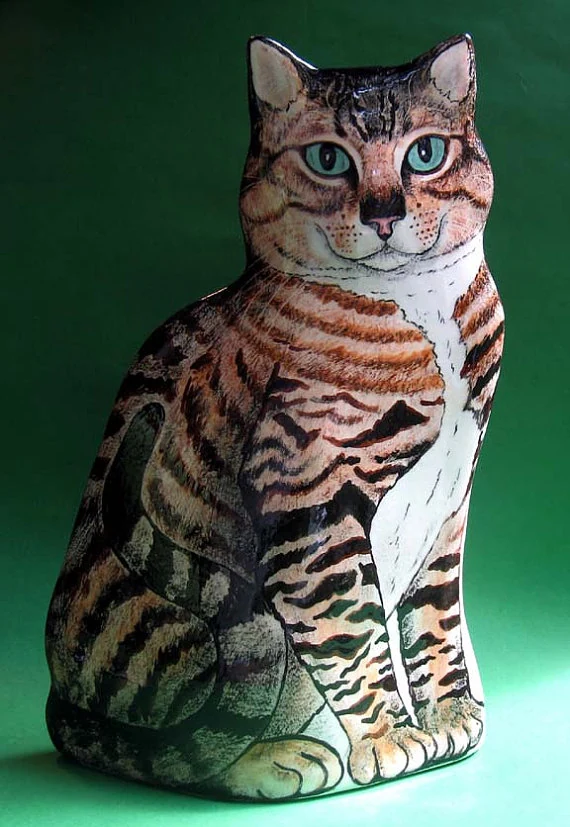
If you would like to display the ashes, urns come in countless styles, from modern and traditional to elegant, playful, or fully custom. A popular choice is an urn shaped to resemble your cat, kept on a mantle or table as a daily reminder. Browse options in our cremation urns guide.
Memorial boxes
As with urns, keepsake boxes come in many materials, including wood, metal, granite, and marble. They often feature an engraved name plate, and some include a slot to hold a favorite photo of your cat.
Jewelry made from ashes
You can keep your cat close by having a small amount of ashes, or a lock of fur, set into a piece of jewelry worn on a chain or hung somewhere special. Cylinder keychains that hold ashes are another option. See our guide to jewelry made from ashes.
Decorative ornaments
Colorful glass globes and candle holders can be made to contain a portion of the ashes, creating a piece that doubles as a quiet, beautiful display in your home.
Grow a tree
A biodegradable urn holds your cat's ashes together with a tree seedling, letting your pet live on with nature by transforming into a growing tree.
Cat coffins
If you plan to bury your cat's body rather than cremate, you can buy a coffin in a range of styles, from a satin-lined white marble casket to a simple wooden box. A plain wooden coffin can even be decorated by a child who loved the cat, which can help them take part in the burial and grieve.
Finding a cat crematorium
There are a few reliable ways to locate a crematorium in your area. The most common is to ask your cat's veterinarian. Vets deal with the loss of beloved pets often and can usually point you to a trusted place to cremate a cat or dog.
You can also search online pet cremation directories, which list providers and services by state. Another option is to contact your local animal shelter, as many handle this situation regularly and some perform cremations themselves. Some facilities only cremate, while others also offer the memorial products described above.
If you are weighing your options more broadly, our cremation providers guide can help you compare.
Making a final decision
Putting a loved one to rest is never easy, and it is far harder when you have to make these choices in the midst of grief. Where you can, it helps to think through the arrangements a little in advance, so the decisions feel less overwhelming when the time comes.
If you are facing the loss of your cat now, or remembering one from the past, we send our heartfelt condolences. Take the time you need, and choose the farewell that feels right for you and your family.
FAQ
Cat cremation: process, costs and ways to memorialize your pet: common questions
- How long does cat cremation take?
- The cremation itself usually takes around two hours or less. The ashes are typically returned to you within a few days, sealed in a bag inside a sturdy box.
- How much does it cost to cremate a cat?
- The cremation alone usually runs from about $50 to $150, with communal cremation often around half that. Extras such as pickup ($30 to $45), witnessing ($20 to $30), and an urn ($50 to $1,000) can add to the total.
- What is the difference between private and communal cremation?
- In a private cremation your cat is cremated alone, so the ashes returned are your pet's only. In a communal cremation several animals are cremated together and the ashes are mixed, which is more affordable but means the remains cannot be individually separated.
- What do a cat's ashes look like?
- They look like a coarse, gritty, sand-like material that is usually gray, sometimes with small fragments of bone or teeth. Any unusual colors typically come from a collar or blanket that stayed with the pet.
- Can I be present when my cat is cremated?
- Yes. Many crematoriums offer witnessed cremation, where the family can be present for the process. Some people find this helps with closure. A small fee is sometimes charged to view it.
- How do I find a cat crematorium near me?
- The easiest way is to ask your veterinarian, who can usually recommend a trusted provider. You can also search online pet cremation directories or contact your local animal shelter, as some perform cremations themselves.
When you’re ready to look at costs
See what's fair where you live before any provider quotes you.

About the author
Adam Binstock
Founder of Cremation Institute
Keep reading
Related guides
Planning a cremation?
See what a direct cremation should cost where you live, and compare trusted providers before you pay for extras you may not need.
Direct cremation costs →